Go the F*ck Free: Best-Selling Illustrator Makes Jury Nullification Fun
Posted: June 13th, 2013 | Filed under: civil liberties, cocaine, drugs, history, marijuana, prostitution | 2 Comments »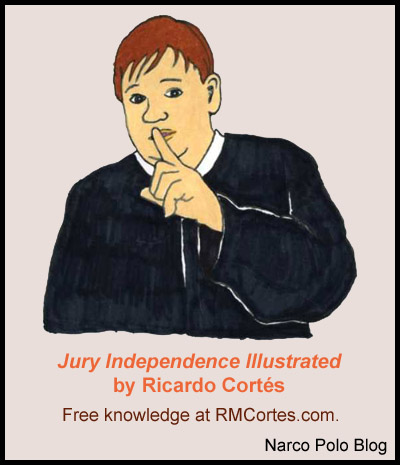
An American juror has the power to deem a defendant “not guilty” in a criminal trial even when the evidence of guilt is overwhelming. The juror can, in effect, nullify a law believed to be either unjust or unjustly applied. This legal doctrine is known as jury nullification. Drug-war opponents and sex-work activists should familiarize themselves with this aspect of jurisprudence, and thanks to Ricardo Cortés jury nullification is now colorfully accessible.
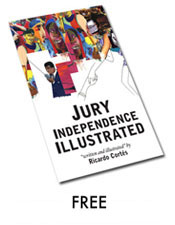
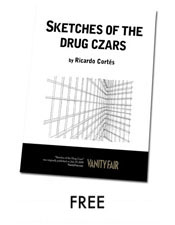
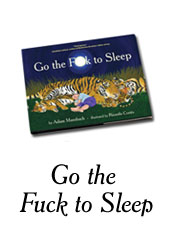
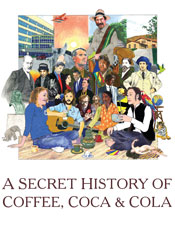
Cortés is the illustrator of the New York Times bestselling children’s book, Go the F*ck to Sleep (2011).* He also wrote and illustrated the children’s book about marijuana, It’s Just a Plant (2005), and A Secret History of Coffee, Coca & Cola (2012). His illustrated book on jury nullification is called Jury Independence Illustrated (2011) and the ebook can be viewed for free here.
 |
 |
Jury nullification has a rich history dating back to before the Revolutionary War. In colonial times it was used to free people prosecuted for criticizing the government. During the 19th century, juries as far south as Georgia would refuse to convict people who aided escaped slaves. During the 20th century, juries used it to free alcohol criminals under prohibition, artists charged under obscenity laws, and homosexuals charged under sodomy laws. (Critics point out that racist juries have also used jury nullification to free persecutors of minorities. A recent case where this may have occurred is here.)
 |
 |
 |
Although jury nullification is explicitly authorized in three state constitutions, many jurisdictions bar judges and lawyers from telling jurors about it. California has gone so far as to rule that a juror who openly argues for jury nullification can be discharged. In contrast, the “Live Free or Die” state of New Hampshire made it a state law in 2012 that judges must allow defense attorneys to inform jurors of their authority to nullify. (Read more about California’s ruling here, and New Hampshire’s law here.) Due to jurisdictions like California, the Fully Informed Jury Association (FIJA) advises:
We caution jurors NOT to lobby their fellow jurors obviously toward nullification during deliberations! It has been established in court precedent that judges may remove jurors, even during deliberations, if the judge becomes aware that they are considering jury nullification in coming to a verdict. If a single fully informed juror is removed from the jury because he or she made his or her intentions known by attempting to lobby other jurors, the defendant may be left without anyone in his or her corner during deliberations. It is much better for the defendant if that fully informed juror simply hangs the jury. A hung jury is always better than a conviction, and the prosecutor will have to think twice about whether or not it is even worth it to retry the case. (2)
Prominent advocates of jury nullification for drug cases include the writers of HBO’s Baltimore drama The Wire, San Diego Mayor Bob Filner, and the George Washington Law School professor Paul Butler. Their statements can be read here, here, and here respectively.
For more detailed information on how to ethically get seated on a jury in order to nullify the prosecutions of non-violent drug criminals read “A Guide to Surviving as a Juror” by the Texas attorney, Clay Conrad. Conrad is the author of Jury Nullification: The Evolution of a Doctrine (1999).

* Samuel L. Jackson’s reading of the book went viral in 2011. It can be seen here.
Sources
1. Clay Conrad, “A Guide to Surviving as a Juror,” CounterPunch.com, 5 Feb. 2003. LINK
2. “Reminder: Juries Can Nullify Marijuana Charges If They Find Them Unjust,” FIJA.org, 1 Apr. 2013. LINK